At a Glance
- 4 imperial cities: Marrakech, Fes, Meknes, Rabat
- Best visited: March–May & Sept–Nov
- Fes medina: UNESCO World Heritage Site
- Chefchaouen: ~3h from Fes by car
- Volubilis: ~1h from Fes, ~30min from Meknes
- Essaouira: ~2.5h from Marrakech
- Ideal circuit: 10–14 days
- Languages: Arabic, Berber, French
Morocco is a country of extraordinary depth. Beneath the desert dunes and Atlas peaks lies a civilisation built over twelve centuries — a procession of dynasties that left behind four imperial capitals, each more labyrinthine and layered than the last. To travel these cities, and then descend to the Atlantic coast, is to traverse the full emotional range of the country in a single journey.
Few travel experiences match the first hour inside Fes el-Bali — the largest surviving medieval city in the world — where a network of 9,000 narrow streets conceals mosques, fondouks, hammams, and the most extraordinary tanneries on earth. Fewer still match the quiet strangeness of Chefchaouen: a mountain town painted in fifty shades of blue, so beautiful it feels slightly unreal.
And then there is the coast. Essaouira's ramparts face directly into the Atlantic wind, its white-and-blue medina a UNESCO treasure shaped by Berber, Portuguese, Arab, and Jewish cultures layered one over another for six centuries. These are the places that stay with travellers long after Morocco is over.
The Destinations
Each city in this circuit offers a completely distinct character. Here is what to expect — and what not to miss — in each.
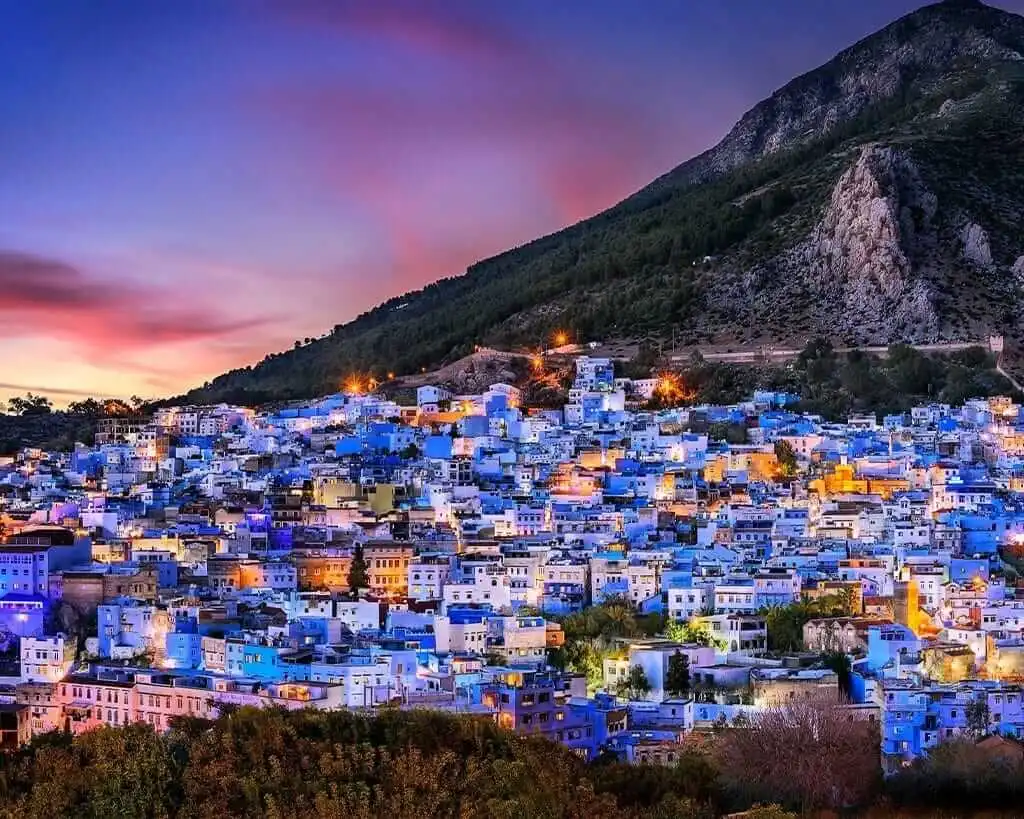 Rif Mountains · North Morocco
Chefchaouen
Tucked into the folds of the Rif Mountains, Chefchaouen is one of North Africa's most visually arresting towns. Its medina has been painted in layered blues — from pale powder to deep cobalt — for generations, the tradition said to promote spirituality and repel mosquitoes in equal measure. Arrive early morning before the day-trippers from Fes. The streets are yours alone, and the light is extraordinary.
 UNESCO · Imperial Capital
Fes el-Bali
Founded in 789 AD, Fes el-Bali is the largest car-free urban area in the world and a UNESCO World Heritage Site of rare significance. Its 9,000 streets contain the Bou Inania Madrasa (considered the finest example of Marinid architecture), the Chouara Tannery — visible from leather merchants' terraces in all its chromatic glory — and the Université al-Qarawiyyin, founded in 859 AD and widely regarded as the oldest continuously operating university on earth.
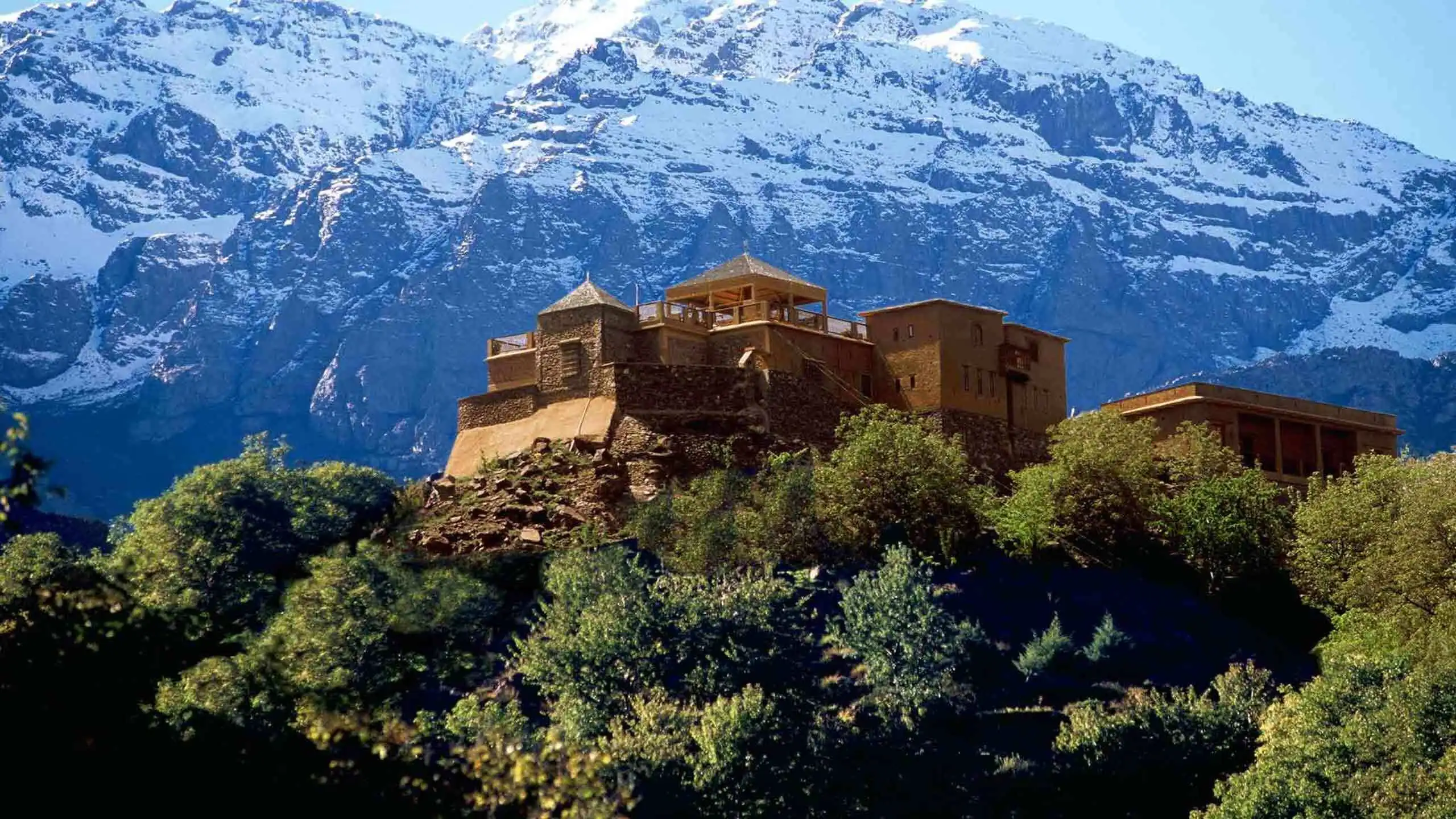 Roman Ruins · Imperial Morocco
Meknes & Volubilis
Meknes is the least-visited of the four imperial cities and arguably the most authentically Moroccan — its souks are unhurried, its monuments vast and crumbling-beautiful. Sultan Moulay Ismail built this city on imperial ambition: 25 kilometres of walls, enormous granaries, and the monumental Bab Mansour gate. Thirty minutes north lie the Roman ruins of Volubilis — a UNESCO site of extraordinary preservation, with standing Corinthian columns and intact floor mosaics dating to the 2nd century AD.
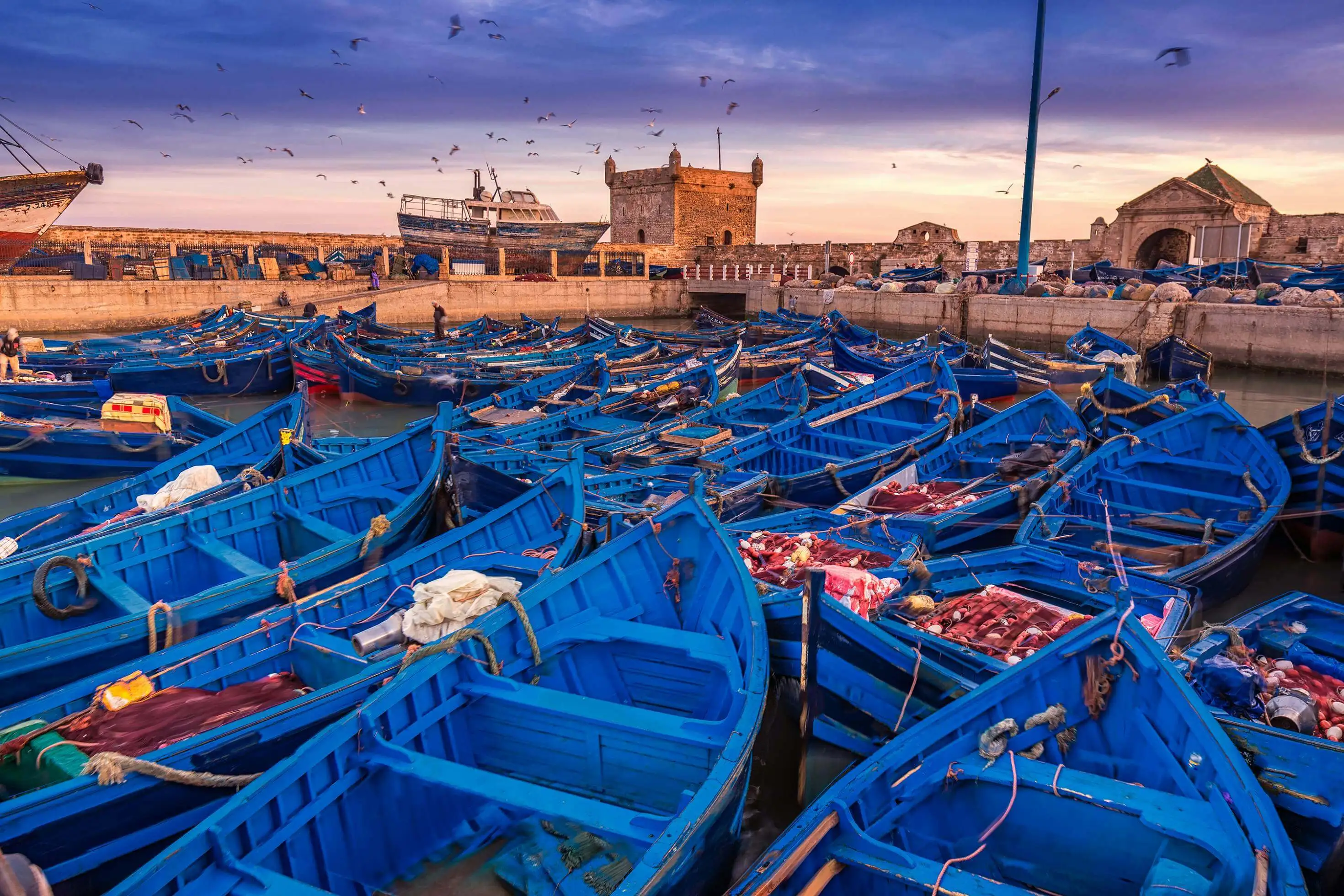 Atlantic Coast · UNESCO Medina
Essaouira
Essaouira defies easy categorisation. Part fishing port, part bohemian arts enclave, part UNESCO world heritage medina, it is a city shaped by the relentless Atlantic wind — the Alizée — that sweeps in from the ocean and fills the sky with kite-surfers and wheeling gulls. Its blue-and-white medina was designed by a French architect in the 18th century but layered with Berber, Jewish, and Portuguese history that gives it a cultural richness entirely its own.
"Fes does not show you its face easily. It is a city of thresholds: you pass through a door expecting a street and find a courtyard; through another and find a school six centuries old, still teaching. You have to earn Fes — and it rewards that effort extravagantly."
Suggested Circuit Itinerary
The classic northern Morocco circuit connects these destinations in a logical loop of 10–12 days, avoiding backtracking and building momentum as each city reveals itself. Below is the route Sahara Trails recommends most frequently.
Arrive, acclimatise. Djemaa el-Fna, Bahia Palace, Majorelle Garden. A night in a riad in the medina.
Day trip or overnight on the Atlantic. Ramparts, harbour, argan workshops, fresh grilled sardines at the port.
Two full days minimum. Tannery visit in the morning light, madrasa tour, souk wandering. A guided medina walk is essential on day one.
Day trip from Fes. Morning at Volubilis ruins, afternoon in the Meknes medina, evening return. A private guide transforms the ruins.
Drive north into the Rif. Arrive evening for the blue medina at golden hour. Full day to wander at will — the kasbah, the waterfall, the mountain panorama.
Return to Marrakech via Rabat and the Atlantic coast road. Or extend north to Tangier and the Caves of Hercules before flying home.
Practical Information
| Detail | Information |
|---|---|
| Best months | March–May (spring flowers, cool temperatures) and September–November (post-summer calm) |
| Avoid | Ramadan can make some restaurants and services limited; summer (Jun–Aug) in Fes and Meknes is very hot (35–40°C) |
| Getting around | Private car + driver is recommended — trains connect major cities but don't reach Chefchaouen or coastal towns efficiently |
| Fes medina guides | A licensed local guide is strongly recommended for day one in Fes el-Bali — navigation is genuinely challenging and context transforms the experience |
| Photography | Always ask permission before photographing people. Tannery terraces are free to enter but a small donation to the leather merchant is customary |
| Dress code | Modest dress in medinas and religious sites — covered shoulders and knees for all genders |
| Currency | Moroccan Dirham (MAD). ATMs available in all cities. Many riads and tours accept card payment |
| Language | Darija (Moroccan Arabic), Berber, French. English is spoken at most hotels and tourist sites |
Frequently Asked Questions
How many days do I need for Morocco's imperial cities? +
A minimum of 10 days allows you to visit Marrakech, Essaouira, Fes, Meknes, Volubilis, and Chefchaouen at a comfortable pace without rushing. Fourteen days gives you breathing room and the option to add Rabat or the Atlantic coast road. Sahara Trails designs custom itineraries around any duration.
What is the best order to visit Morocco's imperial cities? +
The most efficient circuit starts in Marrakech, heads west to Essaouira, then north through the Atlas to Fes, across to Meknes and Volubilis, and finally north to Chefchaouen before returning south or departing via Tangier. This avoids doubling back and builds momentum naturally through the country.
Is Chefchaouen worth visiting or is it overhyped? +
Genuinely worth it, with one condition: arrive on an overnight or multi-night stay rather than a day trip. The blue city empties of crowds in the evening and early morning, and those hours — wandering alone through narrow painted passages as the light shifts — are among the most beautiful in Morocco. Day-trippers see a crowded Instagram set; overnight guests see something quite different.
Can I visit Volubilis as a day trip from Fes? +
Yes — Volubilis is approximately one hour from Fes by car and is easily combined with Meknes into a full day excursion. Sahara Trails offers guided Fes–Meknes–Volubilis day trips with a private driver and optional archaeologist guide who can decode the mosaics and Roman urban layout in extraordinary detail.
Do I need a guide for Fes medina? +
For your first morning in Fes el-Bali: yes, absolutely. The medina has 9,000 streets, no grid, and almost no landmarks visible above rooftop height. A licensed guide does not just prevent you getting lost — they unlock the meaning behind what you are seeing: which dynasty built which madrasa, why the tanneries are arranged as they are, what the symbols carved into the cedar wood mean. After one guided morning, navigating alone becomes far more rewarding.
Is Essaouira worth visiting beyond Marrakech? +
Unquestionably. Essaouira offers a complete change of pace and atmosphere from Marrakech — the Atlantic air is cooler and fresher, the medina is smaller and easier to navigate, the art scene is genuinely interesting, and the ramparts at sunset are one of Morocco's great views. It works as a day trip but rewards an overnight stay significantly, especially for those who want to experience the city after the tour groups leave.